Thumbturn cylinder vs double cylinder
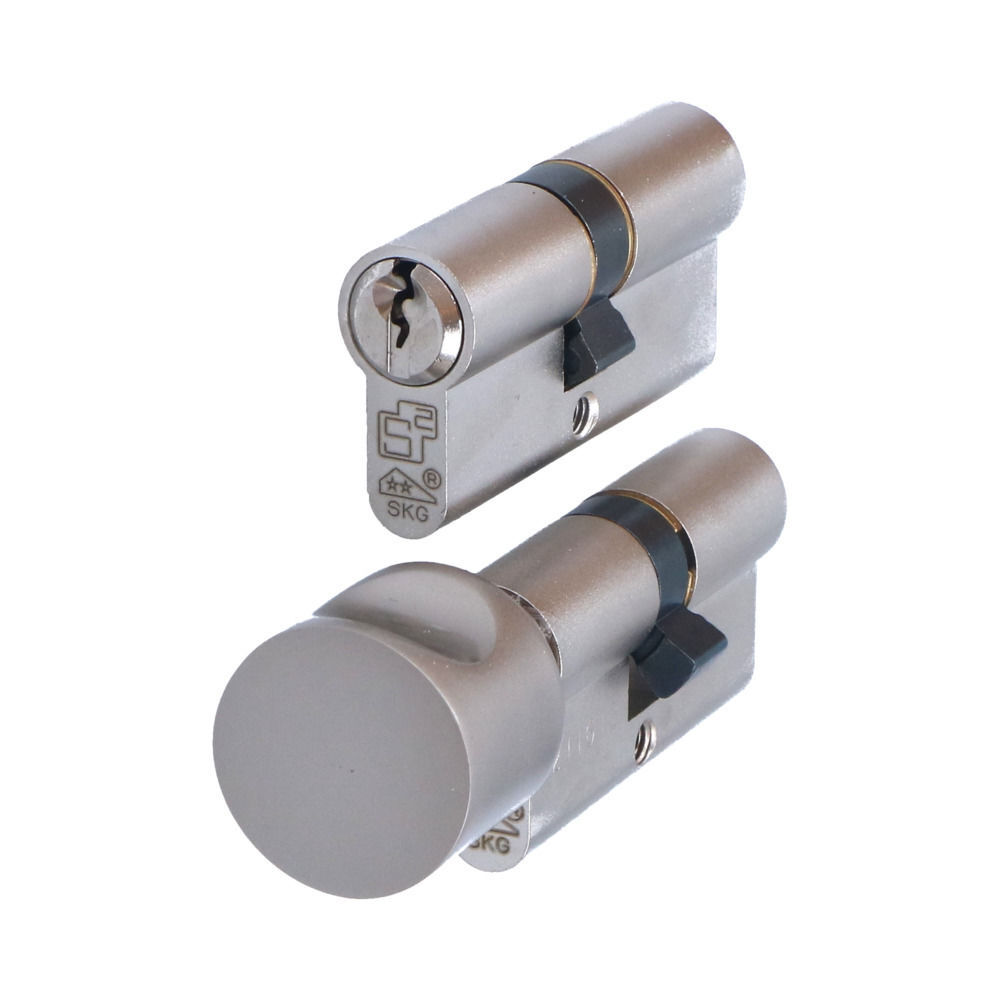
When choosing a door cylinder, you can choose between a double cylinder and a thumbturn cylinder. The main difference is how the cylinder is operated from the inside of the door.
With a double cylinder, you use a key on both sides. With a thumbturn cylinder, you use a key on one side and a thumbturn on the other.
Which version is most suitable depends on the door, how it is used and the preferred method of operation.
What is a double cylinder?
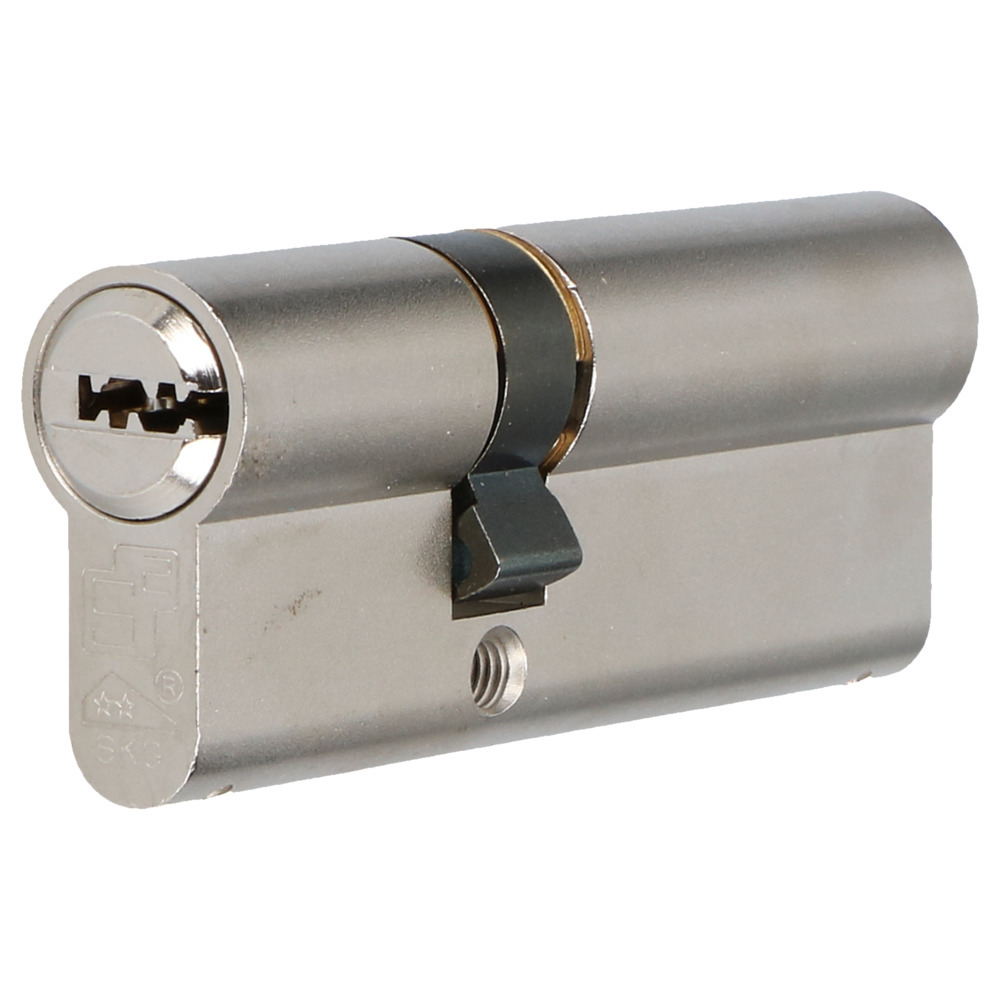
A double cylinder can be operated with a key from both sides. There is a key opening on both the inside and outside of the door.
Double cylinders are commonly used in:
- homes and apartments;
- exterior and back doors;
- commercial buildings and access doors;
- doors where key operation is required on both sides.
An important advantage is that the operation is the same on both sides. You can therefore lock and unlock the door with a key from both the inside and outside.
What is a thumbturn cylinder?
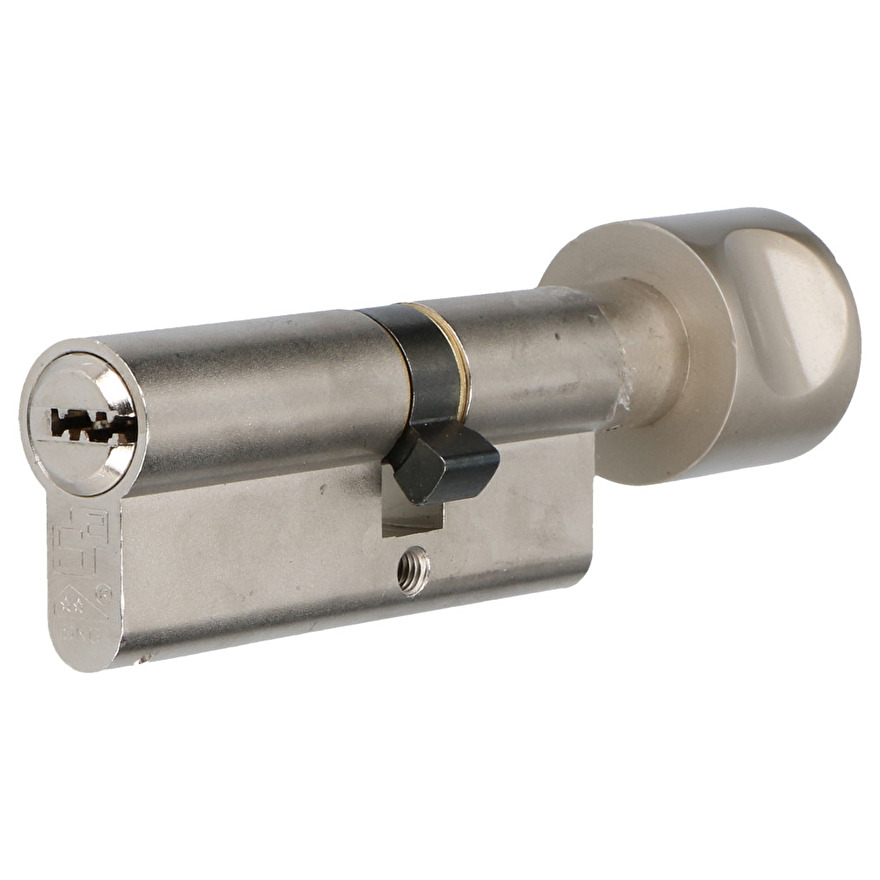
A thumbturn cylinder has a key-operated side and a side with a thumbturn. In Javena applications, the thumbturn is positioned on the inside of the door.
This allows you to operate the door from the inside without using a key. From the outside, the door continues to be operated with a key.
A thumbturn cylinder can be practical, for example, on a door that is frequently opened and closed from the inside.
In product codes, a thumbturn cylinder is often identified by the letter K. Examples include K30/30, K30/45 and K45/30. Exact coding may vary by manufacturer. Always check the product description and dimensions of the specific cylinder.
What is the difference between a thumbturn cylinder and a double cylinder?
The main difference is the way the cylinder is operated from the inside of the door.
With a double cylinder, there is a key opening on both the inside and outside. The door is therefore operated with a key from either side.
With a thumbturn cylinder, there is a key opening on the outside and a thumbturn on the inside. This allows you to easily open and lock the door from the inside without using a key.
From the outside, both versions are operated with a key. The main difference is therefore the convenience and preferred method of operation on the inside.
When should you choose a thumbturn cylinder?
A thumbturn cylinder can be a practical choice when you want to be able to open the door from the inside frequently without having to use a key.
For example, this may be suitable for a back door, access door or another door where simple operation from the inside is preferred.
Pay attention when using doors with glass
If a door contains a window or another glass section, it is important to consider the choice of cylinder carefully.
If a pane of glass can be broken from the outside and the thumbturn on the inside can subsequently be reached, the door may in some situations be unlocked from the inside. A thumbturn cylinder may therefore be less suitable in such a situation.
The same consideration applies to a double cylinder if a key has been left in the cylinder on the inside. If that key can be reached after breaking a pane of glass, it may potentially be used to unlock the door from the inside.
The risk depends, among other things, on the door construction, the position and accessibility of the glass, the security hardware and the cylinder used. With doors containing glass, it is therefore advisable to assess the complete situation rather than looking only at the type of cylinder.
When should you choose a double cylinder?
A double cylinder is a logical choice when you want to be able to operate the door with a key from both the inside and outside.
This may be desirable when:
- key operation is required on both sides;
- you do not want a fixed thumbturn on the inside;
- the door is part of a specific security solution;
- you deliberately want a cylinder with the same basic type of operation on both sides.
With doors containing glass, it is important to avoid unnecessarily leaving a key in the cylinder on the inside when it could be reached from outside.
Thumbturn cylinders and emergency function
A thumbturn cylinder and a cylinder with an emergency function are not the same thing.
The thumbturn determines how the cylinder is operated from one side. An emergency function refers to the ability to operate the cylinder from the other side when a key is already inserted on one side.
This can be important, for example, when someone has left a key in the cylinder on the inside while the door still needs to be opened from the outside with another key.
Would you like to know more about this?
See: Emergency Function on Door Cylinders
What size do you need?
In addition to choosing the type of cylinder, you also need to select the correct cylinder size.
A double cylinder may, for example, be specified as 30/30, 30/40 or 35/45. For a thumbturn cylinder, the thumbturn side is often indicated by a K, such as K30/45.
The correct size depends on the thickness of the door, the position of the lock and the security hardware used.
For more information on determining the correct size, see:
Which Cylinder Size Do I Need?
Would you like to know exactly how to measure an existing cylinder? See also:
How to Measure a Door Cylinder
Can I replace a double cylinder with a thumbturn cylinder?
In many situations, it is possible to replace a double cylinder with a thumbturn cylinder. The reverse may also be possible.
Whether this is actually suitable depends, among other things, on:
- the size of the existing cylinder;
- the type of lock;
- the door construction;
- the security hardware used;
- the desired method of operation;
- any requirements related to the application or security.
With a door containing glass, it is also important to take the accessibility of the inside into account.
Not sure whether a thumbturn cylinder or double cylinder is suitable for your door? A photo of the existing cylinder and security hardware can help to assess the situation correctly.
Which version is suitable for my situation?
The choice between a thumbturn cylinder and a double cylinder may seem straightforward, but the right version depends on how you use the door and on the construction of the door.
Therefore, consider more than just the type of cylinder:
- the preferred operation from the inside;
- the presence of glass;
- the accessibility of the inside;
- the cylinder size;
- the type of security hardware;
- any security or certification requirements.
Still unsure? Javena is happy to help you determine the right version.
Related information
- Security Hardware Buying Guide
- Which Cylinder Size Do I Need?
- How to Measure a Door Cylinder
- Emergency Function on Door Cylinders
- Door Cylinders
- Choosing the Security Level (SKG / Certifications)
Frequently asked questions
What is the difference between a thumbturn cylinder and a double cylinder?
A double cylinder has a key opening on both sides. A thumbturn cylinder has a key opening on one side and a thumbturn on the other.
Is a thumbturn cylinder safer than a double cylinder?
Not automatically. The level of security is determined by several factors, including the cylinder, security hardware, door and overall security. With doors containing glass, the accessibility of the inside must also be taken into account.
Can I replace a double cylinder with a thumbturn cylinder?
This is often possible, but it depends on the cylinder size, lock, security hardware and intended application.
Can I replace a thumbturn cylinder with a double cylinder?
This is also possible in many situations. Always check that the selected cylinder size and version are suitable for the existing lock and security hardware.
What size is a thumbturn cylinder?
A thumbturn cylinder can have different size combinations, such as K30/30, K30/45 or K45/30. The correct size must be determined based on the door and security hardware.
Is a double cylinder always safer for a door with glass?
No. A risk can also arise with a double cylinder if a key is left in the cylinder on the inside and that key can be reached after breaking a pane of glass. The complete door construction and accessibility of the inside are therefore important.






 Ordered before 14:00, shipped today*


