Which cylinder size?
Choosing the correct cylinder size is important for the proper operation of the lock and for a neat, secure installation. The required size depends on factors such as the thickness of the door, the security hardware and the position of the lock in the door.
Cylinders are available in different size combinations, such as 30/30, 30/35 and 35/45. But which size do you actually need?

How is a cylinder size determined?
The size of a door cylinder is determined by measuring from the centre of the fixing screw hole to both sides of the cylinder.
A size such as 30/35 means that the cylinder measures 30 mm from the centre towards one side and 35 mm towards the other side.
With a symmetrical cylinder, both sides are the same length, for example 30/30 or 35/35. With an asymmetrical cylinder, the two measurements are different, for example 30/40 or 35/45.
The order in which the two measurements are stated may vary depending on the manufacturer or product. When ordering, always check the product description and dimensions of the specific cylinder.
At Javena, we list the inside measurement first in our product codes. With a standard double cylinder, this is generally less important because the cylinder can be turned around during installation when both sides have the same function.
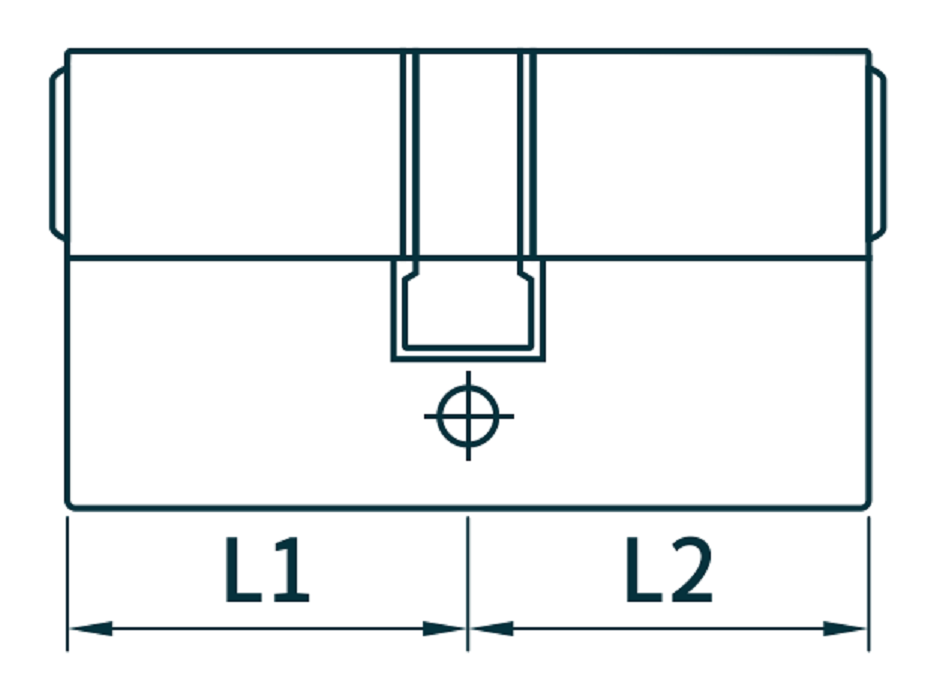
Common cylinder sizes
The required size varies depending on the door and security hardware. Some common combinations include:
- 30/30
- 30/35
- 30/40
- 30/45
- 35/35
- 35/45
- 40/40
These are only examples. Cylinders are available in many different size combinations, so other dimensions are also possible.
How do you choose the right cylinder size?
When choosing a cylinder size, you should not only consider the thickness of the door. The security hardware and the position of the lock also determine how much space is available on each side.
Consider factors such as:
- the thickness of the door;
- the thickness of the security hardware;
- the distance from the lock to both sides of the door;
- the desired position of the cylinder in relation to the hardware;
- any differences between the inside and outside of the door.
The cylinder should fit neatly with the hardware and should not protrude unnecessarily on the outside.
Not sure which size you need? In most cases, the easiest solution is to measure the existing cylinder.
See also: How to measure a door cylinder
Which size for a double cylinder?
A double cylinder has key operation on both sides. The two sides do not necessarily have to be the same length.
For example:
- 30/30 – both sides 30 mm;
- 30/40 – one side 30 mm, the other 40 mm;
- 35/45 – one side 35 mm, the other 45 mm.
An asymmetrical cylinder may be required when the thickness of the door and the security hardware differs on each side.
When ordering, always check the correct measurement order and the product specifications of the specific cylinder.
Which size for a thumbturn cylinder?
With a thumbturn cylinder, the side with the thumbturn is indicated by the letter K in our product coding. The K stands for the thumbturn side, which is located on the inside of the door in our applications.
Examples include:
- K30/30
- K30/45
- K45/30
In this coding, the K side is listed first. For example, K30/45 means that the thumbturn side is 30 mm and the other side is 45 mm.
Exact product coding may vary between manufacturers. Always check the product information for the specific cylinder.
If you want to determine the size of a thumbturn cylinder, it can be measured in the same way as a double cylinder, while taking the position of the thumbturn into account.
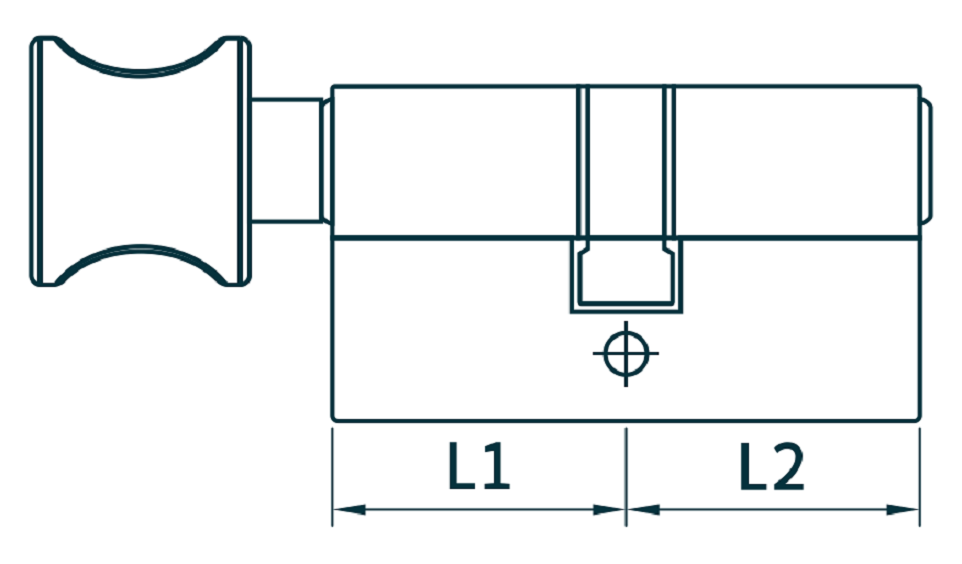
How far may a cylinder protrude?
A cylinder should fit neatly with the security hardware. If the cylinder protrudes too far on the outside, this may negatively affect the security of the door.
As a practical guideline, a cylinder should generally not protrude more than approximately 3 mm beyond the security hardware.
The exact situation may vary depending on the type of hardware and cylinder. Always check that the selected cylinder is suitable for use with the existing security hardware.
Measuring a cylinder
Not sure which size you need? You can measure the existing door cylinder.
The most accurate method is to remove the cylinder from the door and measure both sides from the centre of the fixing screw hole.
See the full guide: How to measure a door cylinder
If you prefer help with measuring, a cylinder measuring tool can often be used to determine the size without first removing the cylinder.
Need help choosing the right cylinder size?
Not quite sure which size you need? For example, send us a photo of the existing cylinder and security hardware. We can help you determine the appropriate version.
If you need several cylinders for different doors, we can also help you identify the correct sizes and versions.
Related information
Buying guide
See the Security Hardware Buying Guide for help choosing a cylinder, lock or other security solution.
How to measure a door cylinder
Read our step-by-step guide to correctly measuring an existing door cylinder.
Cylinder locks
View the range of cylinder locks and the different versions and sizes available.
Emergency function cylinders
Want to know more about cylinders that can also be operated from the outside when a key is inserted in the cylinder on the inside? See our information about emergency function cylinders.
Frequently asked questions about cylinder sizes
How do I know which cylinder size I need?
Measure the existing cylinder from the centre of the fixing screw hole to both sides. Take the security hardware into account when determining the required size.
What does cylinder size 30/30 mean?
A 30/30 cylinder measures 30 mm from the centre of the cylinder to each side.
What does cylinder size 30/40 mean?
With 30/40, one side measures 30 mm and the other side 40 mm. This is used when different lengths are required on either side of the door.
Is a 30/30 cylinder always suitable?
No. The required size depends on the door, lock and existing security hardware. A 30/30 cylinder may be suitable, but this should always be checked based on the actual situation.
What size is a thumbturn cylinder?
Thumbturn cylinders are available in different size combinations, such as K30/30, K30/45 and K45/30. The correct size depends on the door, hardware and position of the thumbturn. In Javena's product coding, K stands for the thumbturn side, which is listed first.






 Ordered before 14:00, shipped today*


